At San Diego Detox in San Diego, California, you will be greeted with warmth, privacy, and clear guidance from the very first call. Your care is physician-led, and during detox you are supported around the clock by medical providers and nurses who monitor your comfort and safety.
We take time to learn your story, explain what to expect, and answer questions without judgment. You can settle into a calm, private environment with balanced meals, rest, and steady check-ins that help you feel grounded.

Opioid Use Disorder happens when repeated use changes the way the brain responds to pain and reward, making it difficult to stop even when you want to. Over time, the body adapts and needs more to feel the same effect, which is how dependence develops.
Common signs include escalating use, taking opioids to feel normal rather than to feel good, disrupted sleep, mood changes, and increasing isolation from people and activities you care about.
At San Diego Detox, we explain OUD in clear language, review your history and goals, and outline a plan that fits your life.
Care is clear, coordinated, and kept on one campus so you can focus on healing. You begin in Medical Detox with continuous monitoring from medical providers and nurses who adjust your plan as your body stabilizes.
When you’re ready, Residential Treatment provides a supportive daily structure with evidence-based therapy and time to rest. If anxiety, depression, or trauma are part of the picture, Dual Diagnosis care treats mental health and substance use together.
Medication Assisted Treatment may be used when it is clinically appropriate to reduce cravings and ease withdrawal. Keeping detox and residential care on the same campus reduces stress between levels of care.

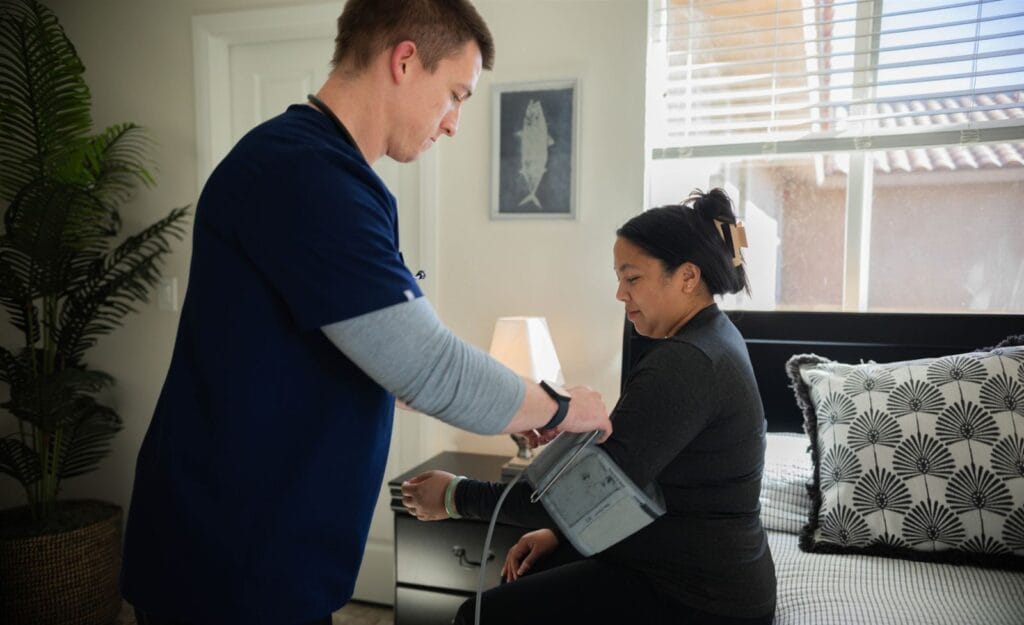
Admission is private and efficient. On arrival, medical providers complete a comprehensive medical and psychiatric assessment so they understand your history, current symptoms, and any safety concerns. From there, you receive a personalized detox plan with frequent checks of vitals and symptoms.
Nutrition, hydration, and sleep support are built into your day so your body can begin to recover.

When withdrawal discomfort appears, medications may be used when appropriate to reduce symptoms, steady sleep, and support appetite — a medical tool called Medication-Assisted Treatment that your provider explains in plain language and monitors closely.
As you begin to feel clearer, your team will talk through next steps and prepare a smooth transition into residential treatment on the same campus.
Opioids create a strong cycle. Tolerance builds, withdrawal symptoms appear between doses, and cravings push you to use again to feel steady. Stress, environment, and co-occurring mental health symptoms like anxiety, depression, or trauma can make the cycle even tighter.
Medical detox provides a safe start with close monitoring, medication support when appropriate, and a calm place to rest. Residential structure adds predictable days with therapy, skills practice, and time to recover your energy.

Opioid use often travels alongside anxiety, depression, or a history of trauma. These concerns can amplify cravings, disrupt sleep, and make change feel harder.
At San Diego Detox, medical providers and the therapeutic team coordinate one plan that treats substance use and mental health together. You will build skills for managing triggers, mood, and sleep right inside your daily schedule so practice becomes part of your routine.
Treating mind and body together lowers relapse risk because you are addressing the reasons you reached for opioids, not only the symptoms.
Moving from Medical Detox into Residential Treatment happens on the same San Diego campus, which helps you keep your momentum with the team that already knows your story. Your week follows an individualized schedule that blends one on one therapy, group therapy, restorative time, and simple wellness routines.
Cognitive Behavioral Therapy maps patterns between thoughts, urges, and actions. Dialectical Behavior Therapy adds tools for emotion regulation and healthier communication so you can ride out cravings and stress without returning to use.


Mornings start calmly. After breakfast, you might meet one on one with your therapist, then join a small group to practice skills that help with cravings and stress.
After a chef-prepared lunch, there is time to rest or journal before an afternoon therapy group or an individual session. Evenings are quiet, with time to reflect, connect with peers, or enjoy a simple mindfulness routine before settling in for the night.
Along the way, small daily wins build momentum: better sleep, fewer spikes in anxiety, a clear conversation with a loved one.
Healing is not only clinical work. Mindfulness, gentle movement, and simple restorative practices help calm the nervous system and improve focus so therapy can land.
Groundwork-based equine therapy offers a different kind of learning. With guidance from trained staff, you practice clear communication, healthy boundaries, and emotional regulation through quiet activities like leading and grooming. Horses respond to the energy you bring, which creates immediate feedback without judgment.
These services complement individual and group therapy by turning insight into embodied skills.

Reaching out is the first step. You can call any time for confidential guidance from a caring admissions specialist. We verify insurance quickly and help with local logistics so arrival feels straightforward.
Before you come, we provide a short packing list and answer questions about medications, phones, and personal items. On arrival, admission is private and efficient so you can settle in, meet your team, and rest.
"*" indicates required fields
As you progress through medical detox and residential care, your team begins planning for life after discharge. When you’re ready to step down, we coordinate a smooth handoff to trusted Partial Hospitalization Program or Intensive Outpatient Program partners locally or near your home.
Together we build an aftercare plan that fits your real life — work schedules, school demands, family responsibilities — and may include ongoing individual therapy, group therapy, and peer support meetings, plus strategies for sleep, stress, and daily routines.
We make sure you leave with clear next steps, contact information, and practical tools for triggers and cravings, so momentum continues as you move from campus to home.
Many people complete medical detox in about three to seven days. Your timeline depends on use history, overall health, and how your body responds to care.
Yes. When it is clinically appropriate, medical providers can use medications to ease symptoms, reduce cravings, and support sleep and nutrition.
You will meet with your team and can start gentle, supportive work. Most structured therapy begins after detox in residential care.
Admissions are discreet, records are secure, and only team members involved in your care have access. Your information is protected and confidential.
Your team builds an aftercare plan with you. Many clients step down to trusted PHP or IOP partners locally or near home for continued structure and support.
With your permission, family sessions can improve communication, set boundaries, and align support at home. Your comfort level guides how and when they participate.
You don’t have to do this alone. Call any time for private guidance from a caring admissions specialist at San Diego Detox in San Diego, California. We can answer questions, verify insurance, and help you arrive safely today.
From your first conversation you will know what to expect and who will be by your side. When you’re ready, we will meet you where you are and help you take the next honest step.
If you would like to learn more about our clinical continuum of care or how we support transitions into long-term treatment, our admissions team is available to help.