Flower, vapes, concentrates, and edibles can make it easy to use more than planned. Over time, tolerance builds and daily routines form around use. Many people lean on cannabis to sleep, to smooth out stress, or to get through long days.
When you stop or cut back, sleep can wobble, irritability can spike, and focus can dip. That’s your body recalibrating. With structure and support, those symptoms settle and your energy and clarity return.
Your first conversation is calm, private, and focused on what you need right now. The intake is physician-led, so your plan starts on a solid clinical footing.

If you notice several of these, extra support can help you reset: cravings that feel stronger or more frequent, morning use or needing cannabis to feel “normal,” anxiety or restlessness between sessions, missed obligations at work or school, mood swings, memory glitches, or low motivation, and tension in relationships or planning life around use.
Tell us your goal up front. Whether you want to cut back or stop completely, you move forward with a plan you understand and can practice immediately.
Medical Detox with 24/7 monitoring and individualized protocols when withdrawal support is needed.
Residential Treatment with evidence-based therapy and restorative daily structure.
Medication-Assisted Treatment (MAT), when clinically appropriate, to reduce cravings and stabilize sleep and mood.
Integrated Dual Diagnosis Care for anxiety, depression, and trauma-related needs within one coordinated plan.
These programs and therapies are available at San Diego Detox in San Diego, California, so your care can progress without switching locations or teams.

On arrival, you meet with medical providers for a full medical and psychiatric assessment. We review your vitals, medications, and current symptoms, then create a personalized plan.
Nurses monitor you closely and check in often, adjusting care as your body responds.

Steady meals, hydration, and gentle routines are built into the day to calm your nervous system. Short walks, quiet spaces, and simple sleep hygiene help you settle.
Consistent wake times and light movement help your body clock reset and reduce afternoon dips. Balanced meal timing and hydration can calm irritability and stabilize energy.
Evening routines limit screens and caffeine so you can wind down. If symptoms are getting in the way, your medical provider may recommend short-term medication, adjusting dosing as your body settles.

Your plan is coordinated by medical providers and the therapeutic team so substance use and mental health are treated together. If anxiety, depression, or trauma are part of your picture, we fold support for mood, sleep, and stress into the same schedule as your recovery work.
When symptoms settle and sleep becomes more consistent, cravings tend to ease and relapse risk drops because the reasons behind use are not ignored.
Cognitive Behavioral Therapy (CBT). You map triggers, thoughts, and routines that keep cannabis in the picture, then practice replacement skills that work in real life.
Dialectical Behavior Therapy (DBT). You build emotion regulation, distress tolerance, and mindfulness, so stress doesn’t automatically lead to use.
Holistic therapy, mindfulness, and yoga help settle the nervous system and sharpen focus. Optional groundwork-based equine sessions build boundaries, communication, and emotional regulation.


Morning: One-to-one time with your therapist to review your goals, followed by a small skills group focused on cravings, mood, or sleep.
Midday: Balanced lunch, a short rest period, and a focused group or practice block.
Afternoon: A therapy session or goal review, with staff check-ins to track sleep, appetite, and comfort.
Evening: Quiet routines and wind-down practices like guided breathing or mindfulness to support consistent sleep.
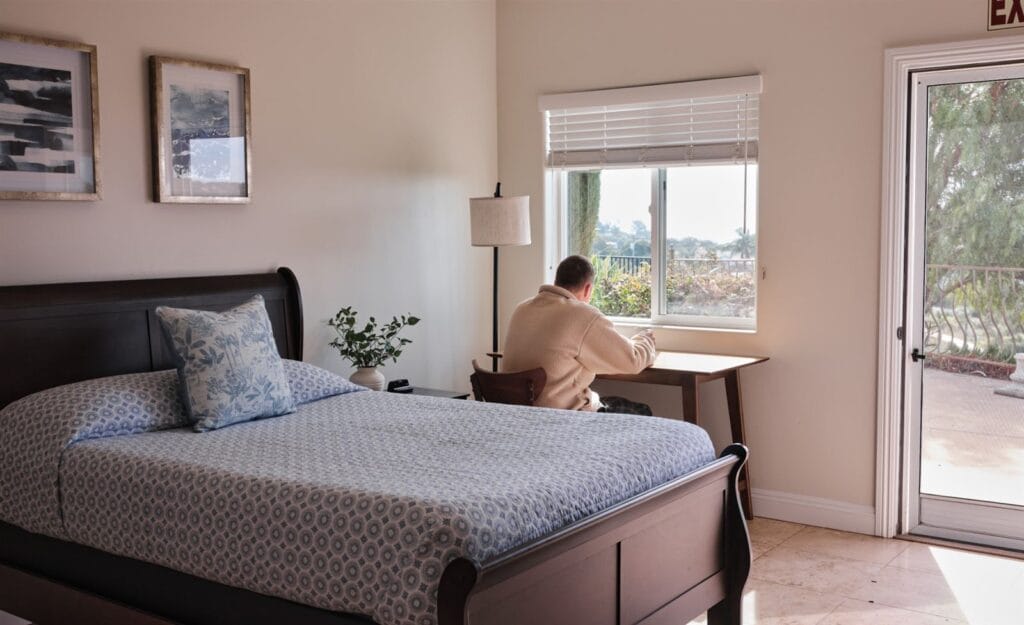
Healing is easier in a calm, respectful setting. You can settle into a private suite designed for rest and privacy, enjoy chef-prepared meals that support recovery, and spend quiet time in serene outdoor areas to reset between sessions.
If you need to handle limited responsibilities, executive workspaces are available so you can stay connected without losing focus on care.

Help is available by phone around the clock. When you call, an admissions specialist can verify insurance quickly and arrange a comprehensive intake assessment to set your plan in place the same day.
On arrival, you meet with medical providers for a full review of your health history, medications, and current symptoms, then settle into your room and begin the first steps of care.
"*" indicates required fields
From the start, your team plans for life after residential care. When it is time to step down, we coordinate a smooth handoff to trusted Partial Hospitalization Program or Intensive Outpatient Program partners in San Diego or near your home.
You leave with a written aftercare plan that fits your schedule and responsibilities. Appointments are confirmed, contact details are shared, and you know exactly what happens during your first week back.
Ongoing therapy, skills groups, and peer support can be built in so you keep momentum.
Many people notice changes for one to two weeks. Sleep and mood tend to improve first as routines settle. Timelines vary based on history and health.
If symptoms like anxiety or insomnia are getting in the way, a medical provider may recommend short-term medication. Doses are adjusted as your body stabilizes.
Gentle, supportive work can begin immediately, with more structured sessions as sleep and focus return.
Admissions are discreet, records are secure, and only team members involved in your care have access.
Length of stay is individualized. Before discharge, your team finalizes a step-down to trusted PHP or IOP partners and confirms aftercare appointments.
Early wins are often simple and noticeable. Sleep stretches get longer. Thinking feels clearer. Irritability spikes less frequently. Over days and weeks, small, repeatable skills start to add up.
If you’re considering a change, the easiest next step is a private phone call. You’ll talk with a compassionate admissions specialist, get clear answers, and learn what care could look like for you.
If you would like to learn more about our clinical continuum of care or how we support transitions into long-term treatment, our admissions team is available to help.