It is sold as an herbal supplement in shops and online. Many people first use it for energy, pain, or to ease off other drugs. Over time, a daily habit can form, and stopping gets harder than you expected.
If that sounds familiar, you are not alone. At San Diego Detox in San Diego, California, our medical team supports you around the clock during detox. We learn your history, explain each step, and build a plan around your needs.
You will rest in a private suite, eat chef-prepared meals, and have staff check in often. Our goal is simple. Help you feel safe, steady, and ready for the next step.

Overview
Kratom comes from the leaves of Mitragyna speciosa, a tree native to Southeast Asia. Its main compounds, mitragynine and 7-hydroxymitragynine, act on the same brain receptors as opioids — at low doses it can feel like a stimulant, and at higher doses more like an opioid. The FDA has not approved kratom for any medical use, and products vary widely in strength; some newer products are concentrated 7-OH, which the FDA says can be more potent than morphine and recommended in 2025 that these products be controlled.
With regular use, the body adapts. You may need more to feel the same effect, or use it just to feel normal. Common signs of dependence include using kratom every day or several times a day, needing more to get the same effect, feeling sick or restless when you skip a dose, using kratom to manage pain, mood, or sleep, and trying to cut back without success. When you stop, your body has to adjust — withdrawal can bring muscle aches, irritability, trouble sleeping, a runny nose, and strong cravings, and many people go back to kratom just to make those feelings stop. Stress, pain, and mental health symptoms can make the cycle harder to break, which is why detoxing in a medical setting matters: it gives you close monitoring, symptom relief, and a calm place to rest while your body resets.
San Diego Detox is a 22-bed program with a 2-to-1 client-to-staff ratio, accredited by CARF and The Joint Commission. Your care can include medical detox with around-the-clock support from our medical team, residential treatment with a structured daily schedule and evidence-based therapy, dual diagnosis care for anxiety, depression, trauma, and other mental health conditions, individual and group therapy including CBT, DBT, and Motivational Interviewing, and holistic therapy and groundwork-based equine therapy. Every plan is individualized, and your team adjusts it as your needs change.

On arrival, you meet with our medical team for a full medical and psychiatric assessment. We review your kratom use, any other substances, your health history, and your current symptoms. From there, you get a personalized detox plan.
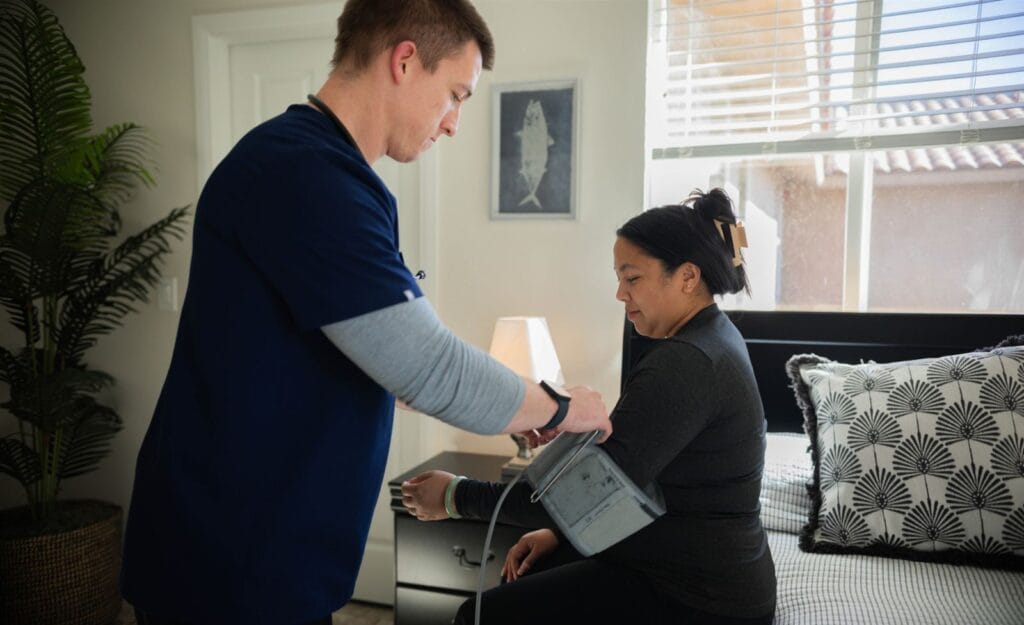

There are no FDA-approved medications for kratom withdrawal. Your medical team may use medications to ease specific symptoms, like aches, nausea, anxiety, or sleep problems. If you also use opioids, Medication-Assisted Treatment may be part of your plan when it is clinically appropriate. Nurses check your vitals and symptoms often, and rest, fluids, and balanced meals are built into your day.
Every person is different — how long and how much you used both matter. Many people notice a general pattern: within the first day, early symptoms can begin and you may feel restless, anxious, or achy; days 2 to 4, symptoms often peak with cravings, sweating, a runny nose, stomach upset, and poor sleep; days 5 to 7, physical symptoms usually ease, though fatigue and low mood may linger; and in the weeks after, sleep, mood, and energy keep improving with support. Medical detox at San Diego Detox typically lasts a few days up to a week, though some people need longer.

Detox helps your body stabilize. Residential treatment is where you learn to stay well. Most stays last about 30 days, based on your clinical needs. Your week blends one-on-one therapy, group therapy, education sessions, and holistic activities. Cognitive Behavioral Therapy helps you spot the thoughts and triggers that lead to use. Dialectical Behavior Therapy builds skills for handling stress and strong emotions, and 12-step facilitation adds community and accountability when it helps you. You also learn practical tools for the problems kratom may have been covering, like chronic pain, low energy, or poor sleep.
Morning: A check-in, breakfast, and a one-on-one session or skills group.
Midday: A chef-prepared lunch, then time to rest or journal.
Afternoon: Group therapy, holistic activities, or equine therapy, based on your plan.
Evening: Quiet time, a short mindfulness practice, and time to wind down.
You can keep your phone — clients may take calls and check email outside of scheduled groups and sessions.


Many people use kratom to cope with anxiety, depression, trauma, or pain, and when those issues go untreated, cravings often come back. At San Diego Detox, our team treats mental health and substance use together — a psychiatric nurse practitioner is part of the care team, and your plan addresses mood, sleep, and stress right alongside your recovery work. Care is trauma-informed: we explain what to expect, give you choices when we can, and move at a pace that feels safe.
With your permission, family can be part of your care too. Family therapy can improve communication, set healthy boundaries, and help loved ones understand kratom dependence — you decide who is involved and how much they take part.
Mindfulness, yoga, and meditation help calm the nervous system and improve sleep, supporting your therapy work and giving you tools to use at home. Our equine therapy is groundwork only, with no riding — sessions are led by equine specialists trained in experiential therapy, and you groom and lead horses through guided exercises. Horses respond to how you show up, which gives you honest feedback without judgment, and no experience with horses is needed.
You stay in a private suite with natural light, and an in-house chef prepares nourishing meals. The grounds include a lazy river, a fitness center, and a movie theater, and executive workspaces are available if you need to handle some work. Your privacy is protected by federal and state law — no information is shared with family, employers, or anyone else without your written consent.

San Diego Detox
Admissions is open 24 hours a day, 7 days a week. Call (888) 291-7388 to speak with an admissions specialist. Your call is confidential, and same-day admission is often possible.
We accept most major PPO plans. You can verify your benefits for free before you arrive, and we will explain each step so you know what to expect.
"*" indicates required fields
Planning for life after treatment starts early. Before you leave, your team builds an aftercare plan with you.
When you are ready to step down, we can coordinate a partial hospitalization program (PHP) or intensive outpatient program (IOP) through trusted providers.
Your plan may also include outpatient therapy, support groups, and ongoing medical care, so you leave with clear next steps and contacts.
It can be. Kratom acts on the same brain receptors as opioids. Regular use can lead to tolerance, cravings, and withdrawal when you stop.
Medical detox typically lasts a few days up to a week. Your timeline depends on how much and how long you used, your health, and any other substances involved.
There are no FDA-approved medications for kratom withdrawal. Your medical team can use medications to ease specific symptoms, like aches, nausea, anxiety, and trouble sleeping.
Some people try, but withdrawal and cravings make relapse common. Medical detox keeps you safer and more comfortable, and residential care helps you build skills to stay well.
Yes. You can take calls and check email outside of scheduled groups and therapy sessions.
San Diego Detox accepts most major PPO plans. We can verify your benefits for free before you arrive.
You do not have to do this alone. Call (888) 291-7388 any time to talk with our admissions team. We can answer your questions, verify your insurance, and help you plan your arrival.
From your first call, you will know what to expect and who will be by your side. When you are ready, we are here to help.
If you would like to learn more about our clinical continuum of care or how we support transitions into long-term treatment, our admissions team is available to help.